Showing posts with label MDA. Show all posts

Friday, March 20, 2026

NAVIGATING COLLEGE SCHOLARSHIPS AND

FINANCIAL ASSISTANCE WITH A DISABILITY


Scott Wiebe, MDA’s Director of Community Programs, is thrilled that applications for MDA Scholarships are opening soon.

The highly competitive scholarships pay up to $5,000 for first-year awardees and $2,500 for existing recipients who renew the scholarship.

“The scholarships are based on merit in leadership and community involvement,” Scott says.

Now in its third year, the program receives about 200 applications and awards scholarships to the top 10 ranked applicants.

MDA Scholarships are not just for high school seniors — anyone with a neuromuscular disease who is in college, a trade school, or a vocational program is eligible.

Scott is proud that MDA is making a positive impact by being part of the support system for scholars with disabilities who are tomorrow’s business leaders, disability rights attorneys, physical therapists, and more.


Thursday, March 19, 2026

NAVIGATING COLLEGE SCHOLARSHIPS AND

FINANCIAL ASSISTANCE WITH A DISABILITY


Maxey Mapp, who lives with myotonia congenita, which causes episodes of muscle stiffness, is pursuing a bachelor’s degree in exercise and sports science at the University of North Carolina. He plans to be a physical therapist.

In addition to an MDA Scholarship, he receives need-based financial aid through his school, and the university has helped him find paid summer internships.

Maxey built his financial support by being organized.

Before applying, he created an account on fastweb.com, an online scholarship database, to keep track of the scholarships he was applying for and when they were due.

“You need to stay on top of scholarship applications — most require essays and letters of recommendation.

Some ask you to create a 30-second video.

Pay attention to deadlines and the time you need to meet them,” he says.


Wednesday, March 18, 2026

NAVIGATING COLLEGE SCHOLARSHIPS AND

FINANCIAL ASSISTANCE WITH A DISABILITY


Grace LoPiccolo, who lives with Charco-Marie-Tooth disease and walks with leg braces, is a Saint Louis University senior, majoring in bioethics and Catholic studies. After graduating in 2026, she plans to attend law school.

The MDA Scholarship is her only disability-based financial aid.

She also receives a merit-based scholarship through her school and a tuition contribution for her service as student body president.

Even when applying for funding unrelated to disability, Grace advises not to shy away from framing your eligibility, skills, and goals through a disability lens.

“My general college essays were about my disability.

When I applied to law school, I mentioned why I want to be a disability rights attorney.

Communicate yourself as a real person who also has a disability,” she says.

Tuesday, March 17, 2026

NAVIGATING COLLEGE SCHOLARSHIPS AND

FINANCIAL ASSISTANCE WITH A DISABILITY


Because she was in the National Honor Society, Abby Dreyer looked for honors programs at universities and learned that ECSU’s honors program pays full tuition.

She also contacted ECSU’s Office of AccessAbility Services, which linked her to a disability-focused scholarship that helps cover part of her housing and food costs.

“Always do your research on websites and via direct email to accessibility offices,” she advises, noting that each person knows their own needs best.

Monday, March 16, 2026

NAVIGATING COLLEGE SCHOLARSHIPS AND

FINANCIAL ASSISTANCE WITH A DISABILITY


Abby Dreyer, who lives with spinal muscular atrophy (SMA) and uses a power wheelchair, is studying business administration at Eastern Connecticut State University (ECSU).

She is an MDA Scholar and wrote a Quest Blog post about transitioning to college and living independently.

Her small-town high school was not helpful in her college search, so Abby took on the research herself.


Sunday, March 15, 2026

NAVIGATING COLLEGE SCHOLARSHIPS AND

FINANCIAL ASSISTANCE WITH A DISABILITY


SSI provides monthly payments to people with disabilities who have little or no income.

State-run agencies provide VR funds to help people with disabilities find and keep jobs.

They may cover education-related expenses that help position a person to join the workforce.

“We all know it’s more expensive to live as a person with a disability,” says Annie Tulkin, MS, CEO and Founder of Accessible College, LLC.

“The more funds you keep in your own pocket, the more you can live independently in school and after graduation.”

Friday, March 13, 2026

NAVIGATING COLLEGE SCHOLARSHIPS AND

FINANCIAL ASSISTANCE WITH A DISABILITY


Annie Tulkin, MS, CEO and Founder of Accessible College, LLC, offers these essential tips for students:

For ongoing financial support, stay in contact with your college or university’s financial aid office and disability or accessibility office.

For support with expenses related to personal care attendants, accessible housing, and transportation, pursue Supplemental Social Security Income (SSI) and Vocational Rehabilitation (VR) funds.

Thursday, March 12, 2026

NAVIGATING COLLEGE SCHOLARSHIPS AND

FINANCIAL ASSISTANCE WITH A DISABILITY


Annie Tulkin, MS, CEO and Founder of Accessible College, LLC, offers these essential tips for students:

Work with your high school counselor.

Most high schools have access to college planning platforms that can help find financial aid.

Use the Swift Student Form to create a Disability Expenses Request Letter and submit it to your college or university’s financial aid office.

Federal law allows financial aid officers to consider disability-related expenses when determining the amount of financial aid a student can receive.

Wednesday, March 11, 2026

NAVIGATING COLLEGE SCHOLARSHIPS AND

FINANCIAL ASSISTANCE WITH A DISABILITY


Annie Tulkin, MS, CEO and Founder of Accessible College, LLC, offers these essential tips for students:

Before applying for college funding, understand each funding source’s requirements and how much time you will need to meet them.

Many scholarships require personal essays and letters of recommendation, which take time to write.

Look for scholarships offered by organizations that support people with your diagnosis.

(For example, MDA’s scholarship for students with neuromuscular diseases.)

Tuesday, March 10, 2026

NAVIGATING COLLEGE SCHOLARSHIPS AND

FINANCIAL ASSISTANCE WITH A DISABILITY


Annie Tulkin, MS, CEO and Founder of Accessible College, LLC, partnered with MDA to compile essential resources for college-bound young adults with neuromuscular diseases.

Find links to webinars and other information at Accessible College and the Muscular Dystrophy Association (MDA): Working Together to Support Students.

Monday, March 9, 2026

NAVIGATING COLLEGE SCHOLARSHIPS AND

FINANCIAL ASSISTANCE WITH A DISABILITY


One key to getting financial assistance is starting early.

According to MDA’s College Planning Timeline, 10th grade is a good time to start making a college budget plan.

While researching schools, reach out to their disability or accessibility officers to ask about scholarships and financial aid options for students with disabilities.

College scholarship applications are generally due in the fall or spring of a student’s 12th-grade year.

The deadline for the Free Application for Federal Student Aid (FAFSA), a program everyone should apply for, is usually June 30 in the year you are applying for.

State deadlines may vary.

Sunday, March 8, 2026

NAVIGATING COLLEGE SCHOLARSHIPS AND

FINANCIAL ASSISTANCE WITH A DISABILITY


Like many high school students, students with neuromuscular diseases may be looking at college as their next step.

But with college tuition costs continuing to spiral, according to U.S. News & World Report, you might be wondering how you’ll afford it.

The key may be combining scholarships, grants, and other financial aid programs and benefits.

Here, current college students and an expert provide tips for finding funding to help you start and finish college.

Friday, June 27, 2025

ACCESSIBLE AIR TRAVEL IS READY FOR TAKEOFF

CAN IT AVOID TURBULENCE?


Know Your Rights as an Airline Passenger

Stay up-to-date on rules regarding accessible air travel and your rights with these resources.


Thursday, June 26, 2025

ACCESSIBLE AIR TRAVEL IS READY FOR TAKEOFF

CAN IT AVOID TURBULENCE?


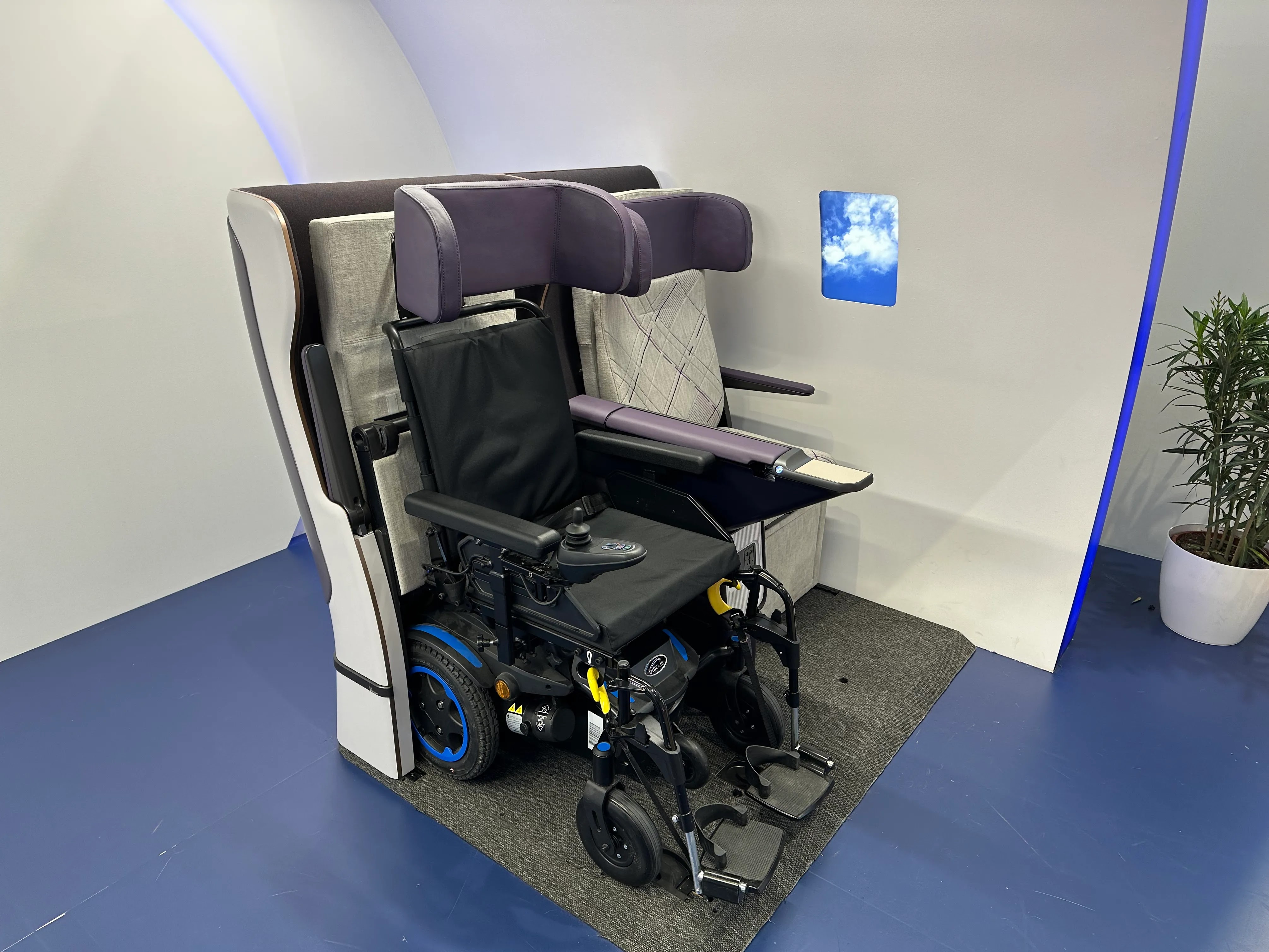
All Wheels Up Founder and President Michele Erwin says momentum is building, evidenced by several airline equipment manufacturers visiting with her during the Aircraft Interiors Expo, the world’s largest aircraft interiors trade show.

She also notes that aircraft manufacturers, such as Airbus, have been attending All Wheels Up’s conferences.

Keeping the momentum going

Just as MDA advocates were key in shaping the provisions of the FAA Reauthorization and new DOT rules, they play a significant role in telling the airline industry and lawmakers that their work is not done.

“MDA stands ready to work with all our champions to drive positive policy change for travelers affected by neuromuscular disease,” says Shannon Wood, Director of Disability Policy at MDA. 

She encourages everyone to write to their elected officials and the DOT to keep building momentum for more inclusive and safer travel.

“Safety and dignity for wheelchair users is a basic right, but it also opens up travel for people with disabilities, which is good for them, good for the industry, and good for business,” Michele says.


Wednesday, June 25, 2025

ACCESSIBLE AIR TRAVEL IS READY FOR TAKEOFF

CAN IT AVOID TURBULENCE?


In addition, the FAA Reauthorization Act includes some victories for moving toward in-flight travel in an assistive mobility device:

  • Congress will fund an in-depth budget impact model exploring how a wheelchair spot in the cabin impacts airlines, equipment manufacturers, tourism dollars, and damage cost avoidance.
  • Testing will focus on tie-down devices that provide safe travel for wheelchair passengers.
  • The FAA will conduct studies on creating evacuation plans for travelers in their own wheelchairs on board. Safety studies and evacuation plans are a core element before the airline industry can move forward.

Tuesday, June 24, 2025

ACCESSIBLE AIR TRAVEL IS READY FOR TAKEOFF

CAN IT AVOID TURBULENCE?


MDA, PVA, and other disability-related organizations agree that adjusting airplane cabins to allow travelers to remain in their wheelchairs while flying is the seismic shift needed in air travel.

For 15 years, All Wheels Up Founder and President Michele Erwin has been leading that charge. She believes airlines are starting to see that it makes economic sense.

“We know 80% of power wheelchair users do not travel by air because of the possibility of lost or damaged mobility devices,” Michele says. 

“There are 4 million wheelchair users in the United States and at least 20 million globally, but only a fraction are traveling. 

When someone travels by plane, airlines don’t just sell one ticket — they sell two to four more tickets to family members, friends, and business associates. 

More accessibility means more revenue.”


Monday, June 23, 2025

ACCESSIBLE AIR TRAVEL IS READY FOR TAKEOFF

CAN IT AVOID TURBULENCE?


“People with disabilities have the right to access any mode of transportation and have the same safe experience that everyone else has,” says Heather Ansley is Chief Policy Officer for PVA and the co-chair of the Air Carrier Access Act (ACAA) Advisory Committee.

“If you have to be across the country the next day — to address an urgent family matter or attend a critical business meeting — the only way you can do that is to fly. People with disabilities are no different. 

They’ve paid the fare, so the airline needs to provide a safe and dignified experience.”

If something happens to your wheelchair or other mobility device during air travel, document the damage or other issues in writing and take photos. 

The quickest way to get a response is to contact the airline. 

Check the airline’s website to see if they have a specific phone number to call for disability-related concerns.

“If the issue is not resolved sufficiently, or if you have concerns that your rights were violated, also submit a complaint to the DOT,” says Shannon Wood, Director of Disability Policy at MDA. 

“It’s those complaints to the DOT that led to the unprecedented fine against American Airlines last year.”

Sunday, June 22, 2025

ACCESSIBLE AIR TRAVEL IS READY FOR TAKEOFF

CAN IT AVOID TURBULENCE?


Heather Ansley is Chief Policy Officer for PVA and the co-chair of the Air Carrier Access Act (ACAA) Advisory Committee. 

The 2024 FAA reauthorization extended the life of the committee and charged it with researching and advising on crucial mobility issues, such as the use of lithium batteries in assistive mobility devices and best practices for service animals in flight.

“Overall, the disability community is focused on our advocacy to make sure any administration knows that we are watching the deadlines given by Congress, and we feel strongly about action being needed,” Heather says.

Many changes that will benefit disabled passengers are still in the rulemaking stage or have longer deadlines for implementation. 

This means it is too early to see widespread change, and it is imperative to work with the administration and the airline industry to ensure forward momentum.


Friday, June 20, 2025

ACCESSIBLE AIR TRAVEL IS READY FOR TAKEOFF


CAN IT AVOID TURBULENCE?

The largest disability enforcement action before this fine was only $2 million. 

Shannon Wood, Director of Disability Policy at MDA, notes that while half of the fine goes to the US Treasury, the remaining $25 million will be credited to American Airlines in the form of offsets.

“Offsets could be used for investments in equipment to reduce wheelchair damage, wheelchair lifts used to safely lower wheelchairs from the jet bridge down to the tarmac, system-wide wheelchair tagging systems, or other improvements,” she says.

MDA works closely with Paralyzed Veterans of America (PVA) and other nonprofit organizations to advocate for better air travel. PVA filed formal complaints about American Airlines’ “physical assistance that at times resulted in unsafe and undignified treatment of wheelchair users.” 

When the fine was levied, the DOT cited PVA’s complaints that outlined egregious actions.

Thursday, June 19, 2025

ACCESSIBLE AIR TRAVEL IS READY FOR TAKEOFF

CAN IT AVOID TURBULENCE?


In February 2025, the trade group Airlines for America and five air carriers — American, Delta, JetBlue, Southwest, and United — filed a lawsuit, arguing that some of the DOT’s new rules regarding protections for passengers with wheelchairs are unnecessary and an overreach. 

As of press time, the DOT’s rules are still in effect.

In October 2024, the DOT showed that its commitment to safer, more inclusive air travel was more than lip service.

It levied a $50 million fine against American Airlines for violating laws protecting passengers with disabilities, sending a signal to the industry that poor treatment of passengers with disabilities would not be tolerated.