Showing posts with label activism. Show all posts

Saturday, June 15, 2024

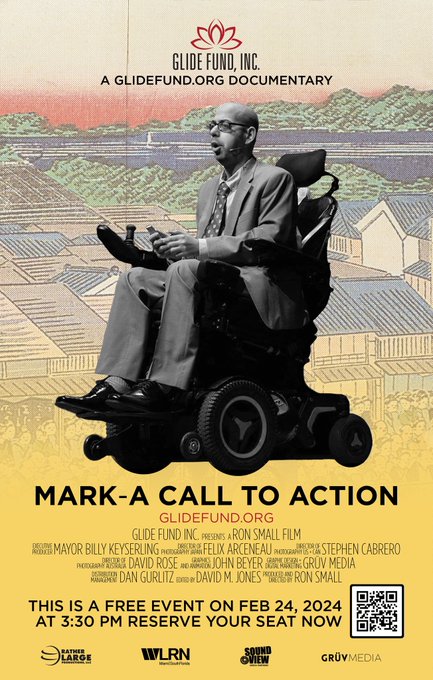
ANNOUNCING THE U.S. PREMIER OF MARK – A CALL TO ACTION

I AM FEATURED AS A UNIVERSAL DESIGN EXPERT

IN THIS ACCLAIMED INTERNATIONAL DOCUMENTARY

I am proud to share details of U.S. premiere of the documentary that features me as a Universal Design expert.

Mark -- A Call to Action debuts June 19 at Bryn Mawr Film Institute.

Every mayor, planner, architect, engineer & urban designer can learn from this film.

Director Ron Small's film chronicles the life and work of scholar/activist Dr. Mark Bookman, who improved the lives of disabled people, creating a legacy that inspires others to work for a world where no one is left behind.

https://tinyurl.com/4vjyeb2z


Saturday, January 13, 2024

TO FUND MY DISABILITY INCLUSION RESEARCH IN JAPAN

I HAVE GREATED A GO FUND ME ACCOUNT

I've spent more than three decades as an advocate for a better built environment for people with disabilities.

For several years, I have done more than $10,000 worth of pro bono work in the disability community.

I have an opportunity to join the family of the late Mark Bookman + Emmy-winning documentary maker Ron Small for a series of events previewing "Mark -- A Call to Action" in Tokyo.

The film portrays Mark's work as a global disability inclusion leader, based in Tokyo.

Bound for PBS, it also is a call to action for all architects, planners, engineers and more -- to create cities and places where all people with disabilities can access all housing, workplaces, schools, parks, arts, shopping, transit and more.

I am budgeting $4,000 for roundtrip airfare (economy, smallest seat), hotel (pod style, lowest cost), transportation (public transit where possible) and meals (low cost street food).

gofund.me/93c0532c


My amount of pro bono work means that for the first time in my life, I am seeking support to help cover the expense of my travel for research.

In addition to the premieres, I will be meeting with key leaders in the disability community in Japan.

Many feel Japan's commitment to Universal Design is creating inclusion for people with disabilities that rivals that opened by the landmark Americans with Disabilities Act.

My photography of innovative design and lifelong contacts made during my 10-day visit will inform dozens of articles and hundreds of social media posts.

gofund.me/93c0532c


I have written stories about best urban design practices to accommodate wheelchair users.

I have worked as a town planner to create better sidewalks, parks, transit and housing for people with disabilities.

I created a groundbreaking course on Universal Design at the highly rated University of Miami School of Architecture.

I make dozens of social media posts each day of the year -- sharing ideas for inclusion and equity in civic spaces.

Your support will allow me to continue to be a leader in planning and design of communities that are accessible to all.

gofund.me/93c0532c


Saturday, December 30, 2023

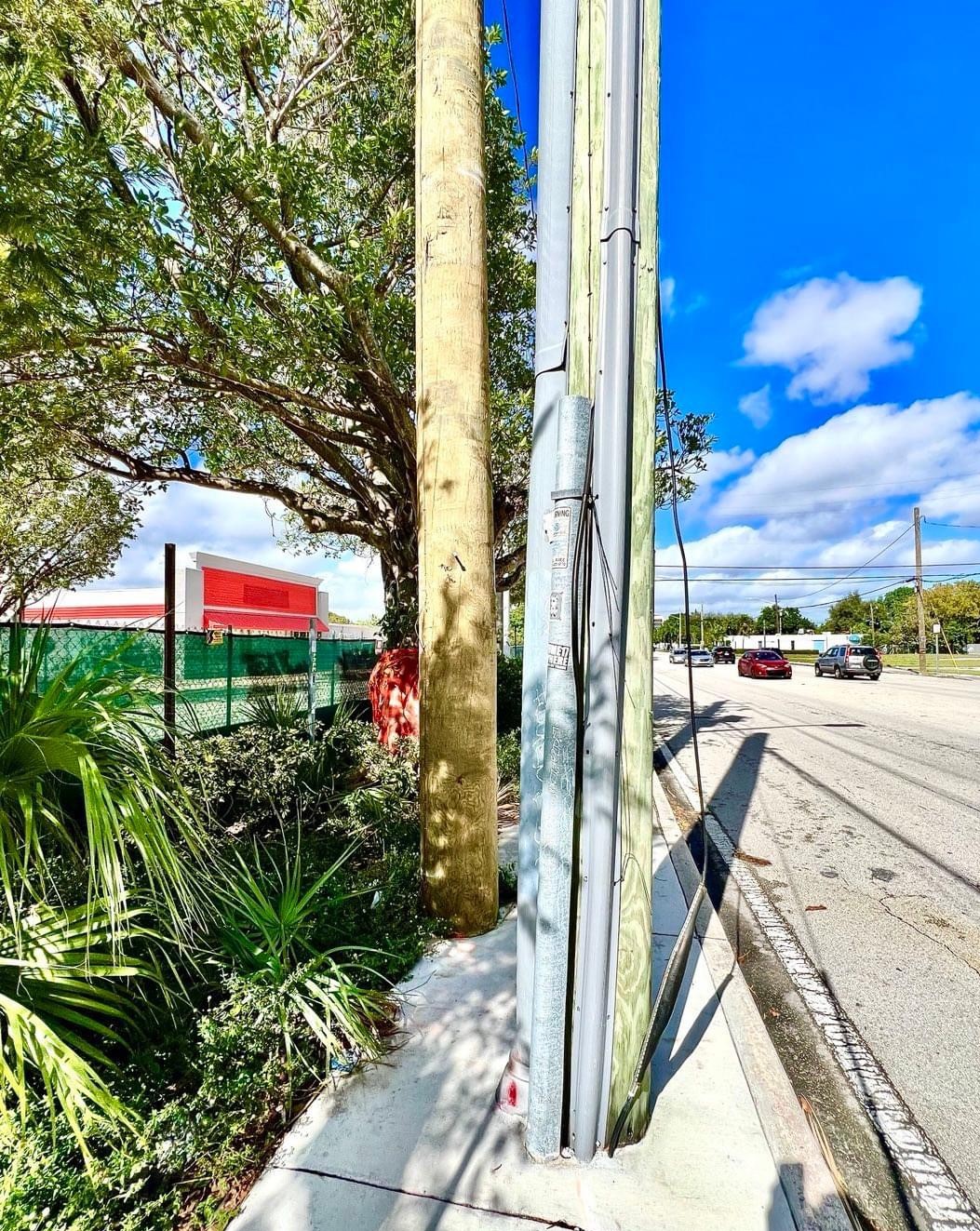
UTILITY POLE SMACK DAB IN MIDDLE OF MIAMI SIDEWALK

CREATES ACCESS ISSUES FOR PEOPLE WITH DISABILITIES

I’m proud to work every day, fighting the good fight for Universal Design, safe streets and equitable mobility.

Cities MUST design for all people.

Streets cannot be just for cars.

They must have wide sidewalks, safe crosswalks and free of barriers that rob people with disabilities of the basic human right of independence, mobility and dignity.

Check out this Local 10 Miami/ABC News profile of my activism and expertise:

https://www.local10.com/news/local/2023/12/18/utility-pole-smack-dab-in-middle-of-miami-sidewalk-creates-access-issues/


Sunday, December 13, 2020

HOMELESS IN PARADISE

DO SOMETHING CHARITABLE AND LOVING FOR THE HOLIDAYS

You have cabin fever.

You can’t get used to wearing a mask.

Your candidate lost.

Your cruise to the Caribbean got canceled due to COVID.

The toilet flushes during your work from home Zoom.

The company cut your pay by a fraction due to the pandemic.

These are minor problems. 

They are fractional reductions in quality of life while we heal physically, psychologically and politically.

People have lost their lives.

Households have lost every job that support them.

Vulnerable people are living each day in fear.

Back off the attitude.

Stop griping.

Search your soul for bias and bigotry -- erase whatever it is that’s causing those destructive thoughts and behaviors.

Do someone a favor.

Buy a grocery gift card for someone in need. Bonus points, do it anonymously.

Embrace life.

Embrace people.

Find something enchanting and interesting and life-affirming in someone who is completely different than you – It’s very easy to do.

Work to make the world a better place.

Do something hands-on to help those who are homeless, jobless, hopeless.

Merry Christmas, Happy Hanukah and Super Solstice.

About the image: This was taken in the early morning in Downtown Miami. In the postcards boasting sun, sea and sand – Miami is a paradise. To the eyes of anyone who walks the Central Business District between the Miami River and Biscayne Bay – sidewalks, overhangs, vacant storefronts and space under bridges is home to hundreds of homeless people. Was it hard to take this picture? Yes. I walked past a half dozen times. But I am a street photographer and storyteller. As an advocate for people with disabilities in specific and marginalized people in general – I am compelled to tell stories (visually and in words) that are painful, sad and challenging. Harsh images, in turn, can help compel people to get involved in positive change. That is why I left this person to their hopefully peaceful slumber while capturing their heart-tugging image.

Sunday, November 30, 2014

DOING THE DME SHUFFLE

My first wheelchair

EARTHBOUND TOMBOY
BY HEIDI JOHNSON-WRIGHT
 
Let’s talk about a tricky dance with a lot of steps, and I’m not referring to the tango, waltz or minuet. It’s a dance familiar to everyone who uses a mobility device and has health insurance. I’m talking about the DME shuffle.

DME stands for “durable medical equipment,” the jargony moniker used by the insurance industry to refer to equipment like wheelchairs and scooters. It also refers to things like oxygen tanks and CPAP machines.

I’ve never worked in the insurance industry so I don’t know its inner workings. But I’ve been a consumer of insurance coverage for decades, so I’m an expert of sorts on navigating from the outside of what feels like an impenetrable, byzantine system. And despite my years of experience, I never cease to be amazed by its frustrating unwieldiness.

Take wheelchairs, for instance. I’ve been a wheelchair user for 30-plus years. I need one to traverse distances of more than four or five feet. Simply put: I gotta have a functioning wheelchair about 16 hours of each and every day, or I’m screwed.
Most of the time, it’s cool. But things get real tricky when it becomes evident that my chair is getting to the end of its life span. One can only repair and hold something together with chewing gum and paper clips for so long.
I can’t predict when the chair will crap out for good. And because it’s essential to my most basic functions, I don’t want to wait too long. Why? Because acquiring a new one is about a six-month process.

The process begins with getting a prescription and a letter of medical necessity from my doctor. Since he’s busy guy, I supply him with the essential info and suggested language he needs to write them. Once I’ve got these documents in hand, the real fun begins.
 
Insurance providers typically subcontract with other companies to provide DME. The DME provider’s bread and butter, though, is primarily diabetic supplies and off-the-rack walkers. When it comes to wheelchairs, they try to push the bare bones basic, one-size-fits-all variety. Give them your height and weight, and they’ll order you a small, medium or large. Those are fine for the retiree who needs one only for trips to the mall or county fair.
But I use a chair many hours every day. I must be evaluated by a rehab professional to determine the type of chair that can accommodate my functional limitations and ergonomic needs. The seat must be high enough from the floor so I can stand up unaided. The back rest must provide comfort and support in the right places. I need a seat cushion that supports my posture but doesn’t aggravate my chronic sciatica. The underside of the chair must accommodate a large bolt that can lock the chair into my van’s tie-down system. I’ll spare you the remaining details.

Friday, November 28, 2014

THE PRISON OF DENIAL

FROM THE EARTHBOUND TOMBOY FILES


By Heidi Johnson-Wright

I used to think denial was like a light switch: either all the way on, or all the way off. For example, you either believed in evolution, or you clung to your knuckle-dragging dogma and denied its existence altogether.

But like so much of human behavior, denial is complicated, shaded between stark black and white with many hues of gray.

Denial can only be put to rest with unconditional acceptance, and acceptance is a long, multi-layered process. I know this all too well. It took me many years to fully accept my diagnosis of rheumatoid arthritis.

No one wants to accept that something terrible has happened to them or to a loved one, especially something utterly undeserved. We want to believe that, all things considered, the universe is fair. The good will be rewarded; the evil, punished. 

What if the terrible thing that happens is starkly real today, but illusive tomorrow? A severed leg ain’t growing back -- ever. You either accept it or you’re going fall down a lot.  But rheumatoid arthritis, or RA -- my disability, is often episodic. Just when you think you can’t take one more miserable day, it eases off for a bit. This only encourages the false hope that the medication, prayers or copper bracelets are actually working.

None of the many forms of arthritis have any known causes or cures. Lots of theories, nothing for certain. This always leaves the door open to “someday they’ll find a cure.” I can tell you that – if you’re not careful -- that door leads straight to the dungeon of denial.

Today, there still are no cures for RA but there are many good medications that can effectively manage symptoms and prevent joint damage. But back in my day if you had the disease in severe form, effective treatment options were sparse.

After half a century of living, I accept that I will always use a wheelchair for mobility. That I will never climb the terraces of Machu Picchu, or wear a pair of high heels.

If you’re struggling to accept a disability, don’t beat yourself up. It takes time, lots of crying, a good sense of humor and perhaps some talk therapy.

Stay strong. Fight past the shame of “otherness” imposed on us by society.

Ultimately, acceptance isn’t defeat. It’s liberation. 
http://earthboundtomboy.blogspot.com/2014/11/the-prison-of-denial.html

Monday, November 24, 2014

ADA EQUALS CIVIL RIGHTS? RIGHT ON!

EARTHBOUND TOMBOY
Service Animals
BY HEIDI JOHNSON-WRIGHT
God bless the Americans with Disabilities Act. But a pox on the houses of those who named it.

Why is it that the ADA – the most broad-sweeping piece of civil rights legislation affecting people with disabilities – does not have the phrase “civil rights” in its title?

If you’re disabled or love someone who is, you probably know it’s a civil rights law. A law that guarantees that people with disabilities have the same opportunities as everyone else to participate in life -- to enjoy employment, goods and services, and State and local government programs and activities.

But a whole lot of people haven’t a clue. People who should know better -- like civic leaders, business owners and journalists.

Folks who are ignorant in this way sometimes dismiss the ADA. The reason I hear most often as to why the ADA need not be complied with is cash.

“Oh, it would be too expensive,” they shrug and say, whether their cost assessment is accurate or not.

When I hear this, I think, “Are you really OK with reducing my equal enjoyment of civil rights -- and that of millions of others -- to dollars and cents?”

Would these cost-benefit analysts say “Sorry, too expensive!” about the civil rights of people in other protected classes, such as race, gender, religion or ethnicity?

Some would, yes. There are always a percentage of willfully obtuse knuckleheads who can’t be reasoned with.

But I think a lot of folks simply don’t see the ADA in the same light as the Civil Rights Act of 1964 because of its moniker. Just as importantly, we disabled Americans have failed to tell our story.

We haven’t gotten the message out that when a restaurant entrance could be ramped but isn’t, it’s the same as having a sign over the door telling African Americans they won’t be served.

We’ve failed to express that when a city has a website inaccessible to blind residents, it’s no different than telling Jewish people they’re forbidden from using that website.

We haven’t communicated that when a company refuses to provide a reasonable accommodation to a deaf employee, it’s equal to paying a man more than a woman, simply because she’s a woman.

We disabled folks have let others hijack our message and “tell our story” for us. And what has it gotten us?

Slanted news stories about those angry handicapped people who should shut up and simply be happy with their special parking spaces.

Shamelessly bigoted politicians who demonize the ADA as something that allegedly bankrupts hard-working business owners.

Sensationalistic, inaccurate headlines about some malcontent in a wheelchair who sued one of those hard-working business owners because a toilet stall was one-eighth of an inch too narrow.

How do we fix it? How do we turn this around so Americans understand the true character of the ADA and its importance to people with disabilities?

I’m not sure. But a good start would be for disability rights organizations to align themselves with other civil rights organizations.

I yearn to see Jesse Jackson on TV asserting that the ADA is just as important to the equality of Americans as the civil rights acts passed in the 1960s.

I long for the day when other leaders – such as those representing Jewish, gay and women’s rights groups – champion the rights of people with disabilities along with those from their own organizations.

Until then, the struggle of folks with disabilities may have plateaued out.

Look on the bright side: we still have the parking.
http://earthboundtomboy.blogspot.com/2014/11/ada-equals-civil-rights-right-on.html?utm_source=feedburner&utm_medium=email&utm_campaign=Feed%3A+EarthboundTomboy+%28EarthBound+TomBoy%29 

Thursday, November 20, 2014

WE NEED TO MAKE THE MEDICAL BUILT ENVIRONMENT ACCESSIBLE TO EVERYONE


THE MOST DREADED DISEASE OF ALL

By Heidi Johnson-Wright 

I like my breasts. I truly do.

They’re nothing special -- certainly not Playboy caliber. But they’re mine. And I’d like to keep them healthy.

Which is why I was disturbed the other day when I passed by a pink mobile mammogram RV. It was parked on a public plaza to motivate women to stop by and have breast imaging done.

I’m all for that. Anything that can detect cancer early on is a godsend. But what stuck in my craw were the four steps at the entrance of the RV. I circled the vehicle but saw no ramp.

I guess the message is this: access to medical care doesn’t necessarily include access for folks with disabilities.

In the interest of full disclosure, I’d already had my annual mammogram done at a world-class cancer clinic. But I thought about other women with disabilities in my community who, for whatever reason, may not able to go to a conventional facility for imaging. Shouldn’t they be able to stop in and get services at the mammogram RV, like anyone else?

It got me thinking. I thought back to my mammogram the previous month. Although the machine’s height was adjustable, there was no way I could have contorted myself into position without standing upright. Because even though I use a wheelchair as my primary means of mobility, I can stand and walk a few steps.

What about others – such as women with spinal cord injuries -- who cannot stand up for a few moments to complete the imaging? And why aren’t people designing imaging machines that are accessible to people with disabilities? If such machines exist, why wouldn’t a major cancer clinic with a stellar reputation have one?

Then I remember how, a couple years ago, I needed a breast ultrasound to supplement the mammography. That same clinic’s ultrasound rooms were so small, I had to park my wheelchair in the hallway and walk into the room to have the test done.

This made me angry, which then jogged my mind further. I remembered how I’ve been going to the same rheumatologist – a wonderful doctor whom I adore -- for 13 years. And though his clientele consists primarily of arthritics who have chronic pain and struggle with limited mobility, none of his exam tables have adjustable height. Should he need me to get up on the table, I would have to either pole vault onto it, or be lifted by a couple of his staffers. Both options are unpleasant and quite frankly, should not even have to be considered.

More memories flooded my brain. I recalled my week-long hospitalization after major hip surgery last year. My room was located on the orthopedic unit, yet the bathroom was inaccessible to me. My surgeon allowed me to get out of bed and use the commode -- even encouraged it. But I couldn’t because the hospital could not provide a garden-variety seat riser. I was also denied a shower because the bathroom had a tub shower but no transfer bench.

Access to health care, from financial and even geographical perspectives, is challenging enough as it is. Why should folks with disabilities have additional hurdles that make them struggle for -- or even  forego -- medical care in one of the most prosperous, developed countries in the world?

I ask the question, yet I already know the answer.

Because ableism -- discrimination in favor of able-bodied people -- is as prevalent and destructive as cancer has ever been.

http://earthboundtomboy.blogspot.com/2014/11/the-most-dreaded-disease-of-all.html

Saturday, November 8, 2014

EARTHBOUND TOMBOY -- THE BEST DISABILITY ISSUES BLOG EVER

LIFE IS A BULLRING


By Heidi Johnson-Wright

 Inspiration and strength sometimes come from unexpected places: the hues of a twilight sky, a silly escapade, a song lyric.

My husband and I were on a trip to Spain when we visited the Andalusian town of Ronda. It’s a lovely spot suspended over a canyon with three iconic bridges. Madonna fans will recall it depicted in gorgeous sepia tones in the “Take a Bow” video.

One afternoon, my husband and I dined at a lovely café, leisurely enjoying lunch and two bottles of Rioja. Next door was the bullring. No corrida de toros that day, but tours were available. We couldn’t resist.

After a pass through the arena’s small museum, we explored the field. Perhaps it was the joy of a pleasant day or the wine or both. I found myself possessed by the spirits of matadors past. I stood up and begin swooping my red jacket like a cape, daring my wheelchair to come at me, its handles like the horns of a bull. My husband began shooting photos as I posed, spurred on by the shouts of an imaginary crowd.

Perhaps it was silly, merely the momentary playfulness of a tipsy woman on vacation. But when we returned home, and I reviewed the pictures, I recalled the lyrics of a song I love. It was “Jean the Birdman,” by English singer-songwriter David Sylvian:

Life is a bullring

For taking risks and flouting rules

Who needs a safety net

The world is open wide

Just look out for card sharks

And the danger signs


I printed out one of my husband’s photos with the lyrics typed below. I posted it on my office wall.


On days when my pain flares or I’m anxious or things are just not going well, I look at the photo.


If only in my mind’s eye, I‘m back in Ronda -- clad in a bullfighter’s spectacular traje de luz – and life seems full of possibilities and adventure.  

http://earthboundtomboy.blogspot.com

Friday, November 7, 2014

TESTING THE TABS

from EARTHBOUND TOMBOY blog

 Wheelie and YAB

By Heidi Johnson-Wright

It’s sometimes hard to gage how folks see you when you have an obvious disability. In their eyes, are you a pitiable creature, a thing to be loathed, a fetish object or simply another human being? I occasionally assume the worst about TABS – the temporarily able bodied. I catch myself now and then presupposing someone harbors bigoted views, even if they don’t.


When I was younger, I used to secretly put others through tests. Perhaps it wasn’t the nicest thing to do, but it seemed necessary at the time. I would make a new friend or meet a cute guy who was boyfriend material, then see how they would react to my disability in certain situations. I was B. F. Skinner and they, my lab rats.

When I went away to college at 17, I had my first personal care attendant that wasn’t a family member. I felt an immediate connection to her. She was enthusiastic but not fawning, and clearly had a sense of humor. She seemed perfect. Or was she?


One day shortly after Lexie had begun working for me, we were in the dorm bathroom. She was helping me with my morning ablutions. We were telling jokes – some cheeky, others raunchy – to pass the time. When it was my turn, I told her a joke that poked fun at disabled people but was straight-up hilarious. She laughed and shook from her head to her toes. Other people I’d told that joke to had frozen just after I delivered the punch line, afraid to laugh. Lexie showed no such fear. She passed my test with flying colors.


The tests I devised for boys were different. If -- when I first met them – I’d been walking, I made sure they’d see me later in my wheelchair. I then watched their reactions. Did their faces show shock or disgust? Discomfort or curiosity?


If a boy passed my initial test, then he moved to the next level. On a first or second date, I’d be sure to hold his hand at the restaurant or movie theater. My hope was he’d be at ease being seen with a disabled chick in public. Usually, he passed. Usually.


Looking back, I realize that my little tests were as much about my own presumptions and biases as anyone else’s. I wasn’t yet comfortable in my own skin and sometimes projected my discomfort on others. Now in my fifth decade of living with a disability, I can finally admit it. 
http://earthboundtomboy.blogspot.com/2014/11/testing-tabs.html 

Tuesday, November 4, 2014

EARTHBOUND TOMBOY: Person First Language

THE POWER OF WORDS


By Heidi Johnson-Wright

I’ve never been a fan of terms like “handi-capable,” “differently-abled,” and “special” when it comes to describing people with disabilities. They come off as trivializing, and make it sound like folks can’t deal honestly with their disabilities. I always imagine such terms were coined by someone who has never lived with a disability and dots each letter “i” with a tiny heart.


I dislike the word “handicapped” but I’m cool with the word “disabled.” And I’m a fan of people-first language. For those unfamiliar with the term, PFL is a way of speaking and referring to people with disabilities that respects them as human beings, rather than dehumanizes them. It emphasizes the person first and the disability, second. A man with a disability, not a disabled man. A woman who is blind, not a blind woman.


PFL represents more respectful, accurate ways of communicating. People with disabilities are not their diagnoses or disabilities; they are people, first.


I also cringe when I see disability stereotypes trotted out by the media. You’ve probably seen them yourself. Putting the person with a disability on a pedestal. Depicting a person with a disability as dependent or as an object of pity. Representing the person as having special talents or abilities because of his or her disability, i.e. the blind person who’s musically gifted.


I could live a long, happy life without ever again reading one more tear-jerking human interest story about incurable diseases or severe injuries. I’d like to see more stories that focus on issues of quality of life for folks who are disabled. Issues such as accessible transportation, housing, employment opportunities and social interaction.


Disability is a natural part of the human condition. The folks with disabilities I’ve met (and myself, too) would rather be known for the things that reflect on their character or their essence as human beings. They would rather be known as a devoted parent or a successful attorney or an amateur gourmet chef rather than as someone with a brace on their leg or someone who wears hearing aids.


So, please: no more heroic overachievers or long-suffering saints. No more cutesy terms that set the teeth on edge. No more stigmatizing words that leave a sting.


Just people – like everyone else.
http://earthboundtomboy.blogspot.com

Tuesday, October 28, 2014

EARTHBOUND TOMBOY -- THE BEST DISABILITY ISSUES BLOG EVER

EVIL WHEELCHAIR: DESTROYER OF LIVES


 BY HEIDI JOHNS0N-WRIGHT
 
Ah, the wheelchair – that sad symbol of failure and loss. A 25-pound contraption of vinyl, metal and rubber that seems to have an almost mystical power to break the human spirit.


You’ve heard the comments.


“That poor man, he’s stuck in a wheelchair.”


“She’s got a handicap that’s left her wheelchair-bound.”


“What a shame – confined to a wheelchair.”


I know of what I speak on a personal level. I’ve been confined to my prison on wheels for 30-plus years. And let me tell you, it’s no picnic.


Using a power wheelchair is certainly a burden. When I got my first one at 18, I realized the consequences right away. It forced me to get around on my own, and I had no choice but to go away to college. Sadly, being able to get out of my house meant I had to meet people, some of whom became dear friends and one of whom became my beloved husband. I even had to get an education.


As if that weren’t bad enough, the chair’s powers sentenced me to getting my own apartment and going away to law school. Three years I spent in that university! Three years of education that allowed me to pass the bar exam on the first try! All due to the mobility caused by that damn chair.


Getting around independently has even more drawbacks. It’s forced me to have a successful career I’m proud of, and allowed my husband and me to take vacations. Wandering the white hilltop villages of southern Spain, exploring the Tuscan countryside, taking in plays on Broadway and London’s West End – all enabled by that blasted chair! Why can’t it just leave me alone?


But at least my days are brightened by kind strangers with pity in their eyes who hand me dollar bills. Why, those extra two or three sawbucks a month sure do help pay the mortgage. And I never grow tired of hearing folks shout out: “Slow down, little lady. You’re gonna get a speeding ticket!” Why, just last week I heard the 5,741st person say that very-same phrase to me and I burst out laughing. Noel Coward and Dorothy Parker had nothing on that clever wag!


I have to hold onto these meager bright moments in my life. Otherwise, the misery of my incarceration in my wheelchair would truly be too much to bear. If only I had no chair to take me around and could simply remain in my house each and every day. I imagine a life spent in front of the TV clad in T-shirts and sweatpants, watching Jerry Springer and eating Cheez Doodles. Ah, but it’s only a dream…


But I vow to accept my fate. I shall remain strong. What choice do I have in this miserable prison on wheels? 
 
Visit the EarthBound TomBoy blog at:
 
http://earthboundtomboy.blogspot.com/