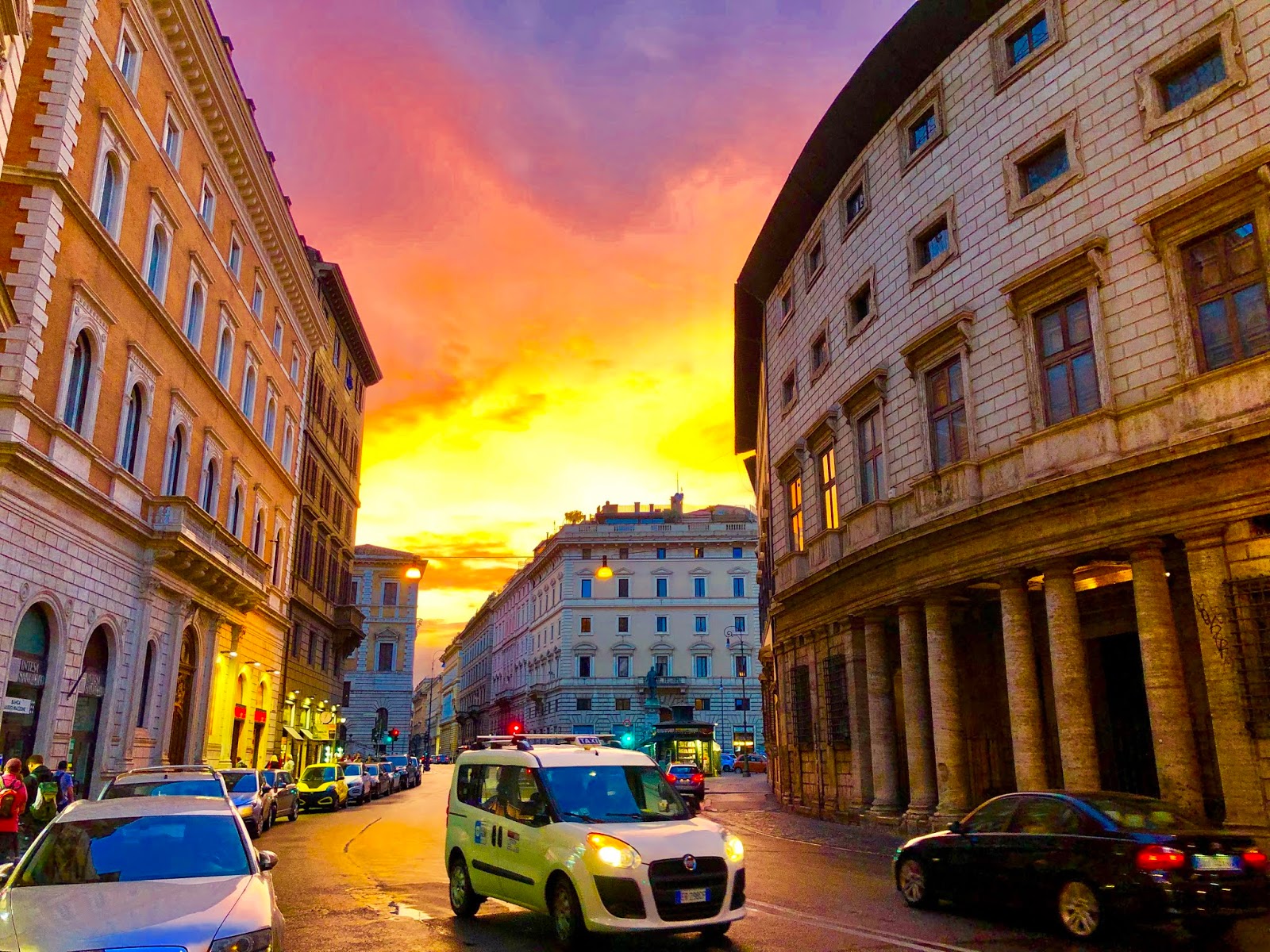
AND INCREASES EMPATHY AND UNDERSTANDING OF OTHERS
In the past two years, I have had the good fortune to visit Rome, Paris, Istanbul, Naples, Ait Ben Haddou, Oaxaca, Marrakech and USA destinations too numerous to list.
In the past decade, I have been to Argentina, Uruguay, Brazl, Guatemala, Nicaragua, Colombia, Costa Rica, the Dominican Republic, Guanajuato and several other destinations in South, Central and Spanish-speaking North America.
Each time, I have come back with not just an exposure to great architecture, cuisine, art and culture -- but also an increased empathy for others.
I grew up very sheltered in the Midwest. My family's idea of a far away foreign nation was Canada -- crossing the bridge in Niagra Falls back in pre 911 days when they barely looked at your ID. A big cultural exposure was driving the station wagon to the Blue Ridge Parkway.
I my journeys, I have formed an intense appreciation for all people of all abilities/disabilities, religions/no religion, gender/gender identity/orientation, race/ethnicity, etc.
My solemn wish, from the White House to the local person who hides behind hatred in online comments to news stories and in angry/hurtful social media blasts, is that 2020 will be a year when we can all embrace our humanity, appreciate our diversity and practice the Golden Rule.
Showing posts with label humanity. Show all posts
Monday, October 21, 2019
Monday, June 19, 2017
ARA GÜLER - 2
I DON'T HAVE HEROES, BUT I MET AN IDOL
Yesterday's post introduced the reader to Ara Guler, the 88-year-old Turkish Armenian photographer belovedly known as the Eye of Istanbul.
His understanding of humanity, captured in black and white film -- as well so some color and moving images -- is unmatched.
He is, without question, the greatest living photographer on earth.
Burdened with a heavy, but well worth it hardback edition of his photos of trams, I was heading down Istlikal Caddesi for another night of roaming the backstreets of Beyoğlu.
I do my own photography -- digital, color, never improved with PhotoShop -- of Istanbul's constantly changing streets.
I was near Galatasaray, when I decided to stop into a cafe to get some tea, or perhaps limonata, for the privilege of using a nice clean restroom before heading out for that golden light.
I sat down, ordered and next to me, was an octogenarian, bald, bearded man who looked a lot like an older version of the legendary historian with a camera who I idolize.
Knowing Guler had opened Time-Life's branch in Turkey in the late 50s, I figured he must know some English.
My phrasebook Turkish is just not adequate.
So I took a sip of Çay, took out the fine bound book I'd purchased hours earlier, and told Guler that I thought he was an artist.
A bit hearing impaired, he leaned forward to ask me to speak up.
Thankfully, he (1) was actually Guler and not a look alike, (2) does speak English and (3) didn't run me off for imposing on him.
I scooted over to the table -- clearly, he was having a bottled water and unwinding from a day in his nearby studio before meeting friends -- and chatted a bit.
He asked me what I thought of Istanbul.
I said it is one of my favorite cities on earth, but I feel it is getting too modern too rapidly.
He observed that it has to find room for 20 million people.
I agreed, but I said not at the expense of an old neighborhood getting sacked in return for high rise tomb stones.
He nodded.
I told him no artist in any medium captures and understands humanity better than him.
He appreciated it.
I handed over my book.
He studied each image.
Many looked to be about a half century old.
He told the story of some of them.
His aged hands glided over the pages, as if he was still looking for some imperfection, some magical angle of light, some way of doing even more brilliant story telling with his still images.
Two men arrived. Much younger than him, but not college age. Contemporaries? Protegees?, or simply neighbors or friends?
I didn't want to over impose. We'd chatted quite a bit about light -- how a photographer's eye for it is 100 times more important than any fancy camera body, zoom lens, filter, etc.
We also talked about humanity. How humanely portraying people in pictures is important on dozens of levels.
From a pure artistic standpoint, introducing humanity into pictures is one thousand times more useful than the most advanced photo editing software -- we agreed.
Getting ready to pay for me tea and limonata -- I ordered both -- and let the great photojournalist get on with his life, I bashfully asked him if he would sign the book that I had purchased at a book fair part of a Ramazan carnival earlier.
His told me he know I wasn't some Ebay profiteer, pretending to befriend him so I could up the value of a book with the autograph of a famous person.
He lovingly inscribed the book.
Till the end of the trip, on the flight and on the taxi ride home, I clutched the signed Guler book like it was more important than my passport.
Classic Ara Guler photo of trams in Beyoğlu, 1960 -- four years before I was born.
http://photojournalistaraguler.com/
Yesterday's post introduced the reader to Ara Guler, the 88-year-old Turkish Armenian photographer belovedly known as the Eye of Istanbul.
His understanding of humanity, captured in black and white film -- as well so some color and moving images -- is unmatched.
He is, without question, the greatest living photographer on earth.
Burdened with a heavy, but well worth it hardback edition of his photos of trams, I was heading down Istlikal Caddesi for another night of roaming the backstreets of Beyoğlu.
I do my own photography -- digital, color, never improved with PhotoShop -- of Istanbul's constantly changing streets.
I was near Galatasaray, when I decided to stop into a cafe to get some tea, or perhaps limonata, for the privilege of using a nice clean restroom before heading out for that golden light.
I sat down, ordered and next to me, was an octogenarian, bald, bearded man who looked a lot like an older version of the legendary historian with a camera who I idolize.
Knowing Guler had opened Time-Life's branch in Turkey in the late 50s, I figured he must know some English.
My phrasebook Turkish is just not adequate.
So I took a sip of Çay, took out the fine bound book I'd purchased hours earlier, and told Guler that I thought he was an artist.
A bit hearing impaired, he leaned forward to ask me to speak up.
Thankfully, he (1) was actually Guler and not a look alike, (2) does speak English and (3) didn't run me off for imposing on him.
I scooted over to the table -- clearly, he was having a bottled water and unwinding from a day in his nearby studio before meeting friends -- and chatted a bit.
He asked me what I thought of Istanbul.
I said it is one of my favorite cities on earth, but I feel it is getting too modern too rapidly.
He observed that it has to find room for 20 million people.
I agreed, but I said not at the expense of an old neighborhood getting sacked in return for high rise tomb stones.
He nodded.
I told him no artist in any medium captures and understands humanity better than him.
He appreciated it.
I handed over my book.
He studied each image.
Many looked to be about a half century old.
He told the story of some of them.
His aged hands glided over the pages, as if he was still looking for some imperfection, some magical angle of light, some way of doing even more brilliant story telling with his still images.
Two men arrived. Much younger than him, but not college age. Contemporaries? Protegees?, or simply neighbors or friends?
I didn't want to over impose. We'd chatted quite a bit about light -- how a photographer's eye for it is 100 times more important than any fancy camera body, zoom lens, filter, etc.
We also talked about humanity. How humanely portraying people in pictures is important on dozens of levels.
From a pure artistic standpoint, introducing humanity into pictures is one thousand times more useful than the most advanced photo editing software -- we agreed.
Getting ready to pay for me tea and limonata -- I ordered both -- and let the great photojournalist get on with his life, I bashfully asked him if he would sign the book that I had purchased at a book fair part of a Ramazan carnival earlier.
His told me he know I wasn't some Ebay profiteer, pretending to befriend him so I could up the value of a book with the autograph of a famous person.
He lovingly inscribed the book.
Till the end of the trip, on the flight and on the taxi ride home, I clutched the signed Guler book like it was more important than my passport.
Classic Ara Guler photo of trams in Beyoğlu, 1960 -- four years before I was born.
http://photojournalistaraguler.com/
Labels:
ARA GÜLER,
Armenian,
artist,
Beyoğlu.,
cay,
Galatasaray,
humanity,
images,
Istlikal Caddesi,
light,
photography,
photoshop,
the Eye of Istanbul,
Time Life,
Turkey,
Turkish Tea
Subscribe to:
Posts (Atom)