Showing posts with label SAFE SIDEWALKS. Show all posts

Saturday, July 11, 2026

THE CITY OF MIAMI MAY FINALLY TAKE ACTION TO ENSURE SIDEWALKS REMAIN SAFE AND OPEN DURING CONSTRUCTION

MIAMI-DADE COUNTY MUST FOLLOW SUIT, SO MAJOR COUNTY STREETS REMAIN BARRIER FREE FOR PEOPLE WITH DISABILITIES AND ALL PEDESTRIANS


I had the privilege of speaking in favor of FR 1 – (Ordinance 19073, to keep sidewalks safe and open during construction) at the Miami City Commission meeting this week.

I applaud Commissioners for creating and sponsoring this legislation.

After serving the District 3 constituents for nearly a decade, my next career direction was marketing urban design and working as a town planner.

My specialty is pedestrian access and mobility for people with disabilities.

Cities that work are cities that remove barriers to pedestrian safety.

Safe sidewalks protect children and elderly while greatly increasing the economic outlook for mom and pop shops, restaurants and services that depend on foot traffic in our urban city.
In my work around the world to promote wheelchair access, I have sadly shown a segment of downtown Miami just west of the World Center where both sides of the street are completely shut down for years of high rise construction.

Out of the 100 cities I have worked in, the both sides blocked – between a billion dollar development and a billion dollar Bright Line Train Transit system – was the worst example of pedestrian safety and mobility for people with disabilities.

Other cities solve this by requiring scaffolding or other ways of keeping sidewalks.
I returned yesterday from work in Manhattan.

I walked past more than 100 construction sites.

100% of the time, the sidewalk was maintained.

Miami MUST match NYC’s success at maintaining pedestrian mobility.

This is crucial for people with disabilities.

People with disabilities are the most under and unemployed of any minority group.

That is NOT because of their disability, it is because of the obstructions that we allow that ruin sidewalk mobility and the access it provides to transit.

Developers may say this is an onerous cost.

I say that anyone who puts the basic human rights and dignity of disabled people to a cost benefit analysis is being shamefully inhumane.

I urge the five Miami City Commissioners to approve this unanimously, when it returns for second reading.

It can be the first step (ticketing and towing cars the perpetually block sidewalks would be another huge boost to safety for disabled veterans and others) toward Miami delivering the mobility its residents deserve.

Read FR 1: https://miamifl.iqm2.com/Citizens/FileOpen.aspx?Type=14&ID=3893&Inline=True


Tuesday, July 7, 2026

THE CITY OF MIAMI’S AND MIAMI-DADE COUNTY’S MOBILITY PRIORITIES ARE UPSIDE DOWN AND DO NOT SAFEGUARD PEOPLE WITH DISABILITIES

LOCAL GOVERNMENT HAS HUNDREDS OF REGULATIONS FOR CARS IN STREETS – BUT WE SHAMEFULLY HAVE VIRTUALLY NO REGULATIONS TO PROTECT PEDESTRIANS ON SIDEWALKS


This is the first delivery bot that I’ve seen that can back up.

When they don’t, it is catastrophic for a wheelchair user. 90% of the bots that I have seen stop when a disabled person approaches.

That blocks essential curb ramps and narrow sidewalks.

The City of Miami, Miami-Dade County and other cities MUST regulate these hogs of the sidewalk bots.

Only those programmed to back up out of the way of people with disabilities should be allowed.


Saturday, January 3, 2026

DOWNTOWN MIAMI MOBILITY IS A LIVING HELL

FOR PEOPLE WITH DISABILITIES AND OTHERS
 WHO FACE CONSTANT  BARRIERS

For more than a decade, downtown Miami has been a living hell for people with disabilities.

Dozens of sidewalks are illegally closed for construction for 3+ years.

Existing sidewalks are often narrow and rarely accessible.

This photo depicts a completely destroyed/too narrow sidewalk has festered for years.

It is an incredible danger to people with mobility/vision disabilities.

It connects to the nearby Brightline transit station.

This segment of NW 6 St. just east of NW. 1st Ave. must be fixed.


Saturday, December 27, 2025

DOWNTOWN MIAMI = LEAST WALKABLE URBAN CORE IN THE USA

CITY IGNORES CENTURY-OLD SIMPLE SCAFFOLDING THAT COULD KEEP SIDEWALKS OPEN AND SAFE DURING CONSTRUCTION


How is it that the bankrupt Cleveland Ohio of my youth could maintain pedestrian and wheelchair access via simple scaffolding more than a half century ago?

But Miami destroys pedestrian safety in the name of development that blocks all sidewalks downtown.

This soul-killing photo shows urban policy that is unacceptable/illegal according to ADA.

Both sides of NE 6 St. west of NE 1st Ave. blocked for years of construction.

There is zero provision of legally required temporary pedestrian/wheelchair accessible pathway.


Saturday, December 6, 2025

MIAMI BLOCKS WHEELCHAIR ACCESS AND WALKABILITY

TO A SHAMEFUL LEVEL UNAMATCHED BY ANY CITY ON EARTH


Wheelchair access is destroyed in the heart of Miami — a block of NE 1st Ave. south of NE 6 St.

The west side is construction without the legally required wheelchair accessible temporary route.

The east side has a bus bench advertisement that pinches the sidewalk to 2 feet wide.

This is an emergency that must be fixed immediately.

It violates the ADA.

Saturday, November 22, 2025

MIAMI’S PEDESTRIAN MOBILITY IS SUB THIRD WORLD

A VISITING PLANNER IS SHOCKED BY LACK OF WHEELCHAIR ACCESS


I met a well-known urban planner at downtown Miami’s Brightline Station.

She was beyond shocked that we ran across more than a dozen sidewalks completely shut down for developers: She noted how this destroys the pedestrian and transit link.

My planner friend is from a relatively poor city — but it requires 100% of its sidewalks to remain open during construction.

This is achieved through simple scaffolding – it’s been around 100 years.

She said Miami only pretends as being a world class city.

My planning colleague has worked in cities after earthquakes and bombings.

She said the urban core of Miami is only slightly more navigable by wheelchair and on foot than those destroyed places.

Saturday, October 4, 2025

CITIES TYPICALLY NEGLECT LOWER INCOME NEIGHBORHOODS

WHEN THE UPGRADES COME, CITY LEADERS ARE CLEARING THE WAY FOR NEW WELL-HEELED RESIDENTS – NOT THOSE THAT HAVE SUFFERED WITH SUBSTANDARD CIVIC SPACE

An outsized proportion of people with disabilities is unemployed or underemployed. 

When cities care about fixing/widening sidewalks + safe crosswalks & premium transit--the affordable/accessible housing is on the way out and the wealthy hipsters are on the way in.

Saturday, April 5, 2025

MIAMI REFUSES TO PROTECT PEOPLE WITH DISABILITIES

CARS DANGEROUSLY BLOCKING SIDEWALKS ARE NEVER TOWED

Welcome to Miami — where we despise pedestrians.

Dozens of times I have asked cops to tow cars blocking sidewalks — because it forces people with disabilities into dangerous streets.

The answer always is NO.

But Miami Police does tow vehicles (because we all know 5000 pound trucks and SUVs are more important than human lives.)

The city tows vehicles that: slightly block the roadway, park in areas temporarily roped off for festivals, break down in traffic, etc.

Basically, if it slows traffic by 1% -- it's towed.

If it endangers people with disabilities & all pedestrians by 100% -- it's ignored.

PLEASE STOP THE ABLEISM NOW!


Friday, January 3, 2025

WHEN DRIVING IS NOT AN OPTION

STEERING AWAY FROM CAR DEPENDENCY

Straightforward Planning Tools to Serve Nondrivers

Make nondrivers visible. 

Place nondrivers on mobility advisory boards, make sure surveys include them, hire nondrivers for transit and transportation planning positions.

Reduce traffic speeds. 

Planners know it's not just lowering speed limits. 

Road diets, bulb outs, traffic circles, and raised sidewalks can slow traffic and make it pedestrian-friendly.

Allow for longer crossing times at crosswalks. 

Know that 30 seconds to cross is not enough time for a person using an assistive mobility device or younger or older citizens.

Take public ownership of sidewalk repair and maintenance. 

If a nondriver must walk six blocks to a transit stop, clear it of barriers and make it accessible to all. 

Treat sidewalks as any other infrastructure — plan, fund, and maintain them.

Make transit at least as reliable as driving. 

Approach transit as an equal part of the mobility ecosystem, making it safer and more connective for citizens.


Thursday, January 2, 2025

WHEN DRIVING IS NOT AN OPTION

STEERING AWAY FROM CAR DEPENDENCY


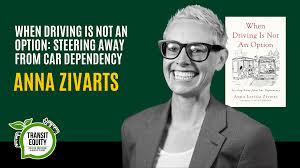
In Anna Zivarts' 176-page book, When Driving is Not an Option, she points out that many states have concurrency requirements that require developers to build more car capacity.

But she thinks multimodal capacity, with an emphasis on transit and pedestrian mobility, would be a better, more inclusive approach.

Strong pedestrian and transit networks can support denser, transit oriented development that can include housing that is attainable, she writes.

"Make no mistake, I want an outcome of slower traffic. I want it to become less desirable, less convenient to drive places," Zivarts says.

When that happens, she adds, two good things will occur: a critical mass will demand great transit and pedestrian mobility and there will be enough users to create demand for that premium transit.

Wednesday, January 1, 2025

WHEN DRIVING IS NOT AN OPTION

STEERING AWAY FROM CAR DEPENDENCY


Anna Zivarts, author of When Driving is Not an Option, challenged planners and elected officials to do just that during the Week Without Driving challenge in the greater Seattle area.

Many never had to depend on public transportation for every work, recreational, medical, shopping, or social trip. This showed them firsthand the gaps in the system.

Her work — and words — have clearly made an impact. Roger Millar, FAICP, the secretary of transportation for the Washington Department of Transportation, invited Zivarts to speak at the 2021 annual meeting of the American Association of State Highway and Transportation Officials.

He told Zivarts that his counterparts in other states were texting him during her presentation, checking in with staff and asking them to investigate the number of nondrivers in their states.


Tuesday, December 31, 2024

WHEN DRIVING IS NOT AN OPTION

STEERING AWAY FROM CAR DEPENDENCY


This overlay information can help planners focus dollars on filling in the gaps or rerouting transit to better serve everyone in the community, including the 31 percent who don't drive, according to WisDOT's analysis.

Anna Zivarts, author of When Driving is Not an Option, says a simple way to value the experience of nondrivers is to put yourself in someone else's shoes, like a person trying to cross an eight-lane arterial, while negotiating mud puddles and overgrown bushes along the edge of a road with no sidewalks.

Or, try pledging to ditch your car and rely only on public transit for a few days.


Monday, December 30, 2024

WHEN DRIVING IS NOT AN OPTION

STEERING AWAY FROM CAR DEPENDENCY


Anna Zivarts' book -- When Driving is Not an Option  -- offers a useful tool. The OpenSidewalks project at the University of Washington's Taskar Center for Accessible Technology uses open data sources, verified by on-the-ground community audits, to map sidewalk networks.

It goes beyond a typical Americans with Disabilities Act (ADA) assessment, empowering planners and others with information about sidewalk slope, minimal effective width, and lighting.

Zivarts details how in 2020, disability advocates convinced Wisconsin's Department of Transportation (WisDOT) to form a nondriver advisory committee.

"When you overlay where the transit is, where the routes are, and where the stops are with where people who are nondrivers actually live, those two things don't overlap," committee co-chair Tamara Jackson says in the book.

"This forces transportation planners to consider whether people are unable to use transit because 'it doesn't go where they need to go, or they can't get to it.'"

Sunday, December 29, 2024

WHEN DRIVING IS NOT AN OPTION

STEERING AWAY FROM CAR DEPENDENCY


Tanisha Sepúlveda is a program coordinator at Empower Movement WA, a collective that advocates for disability justice, transportation equity, and community access.

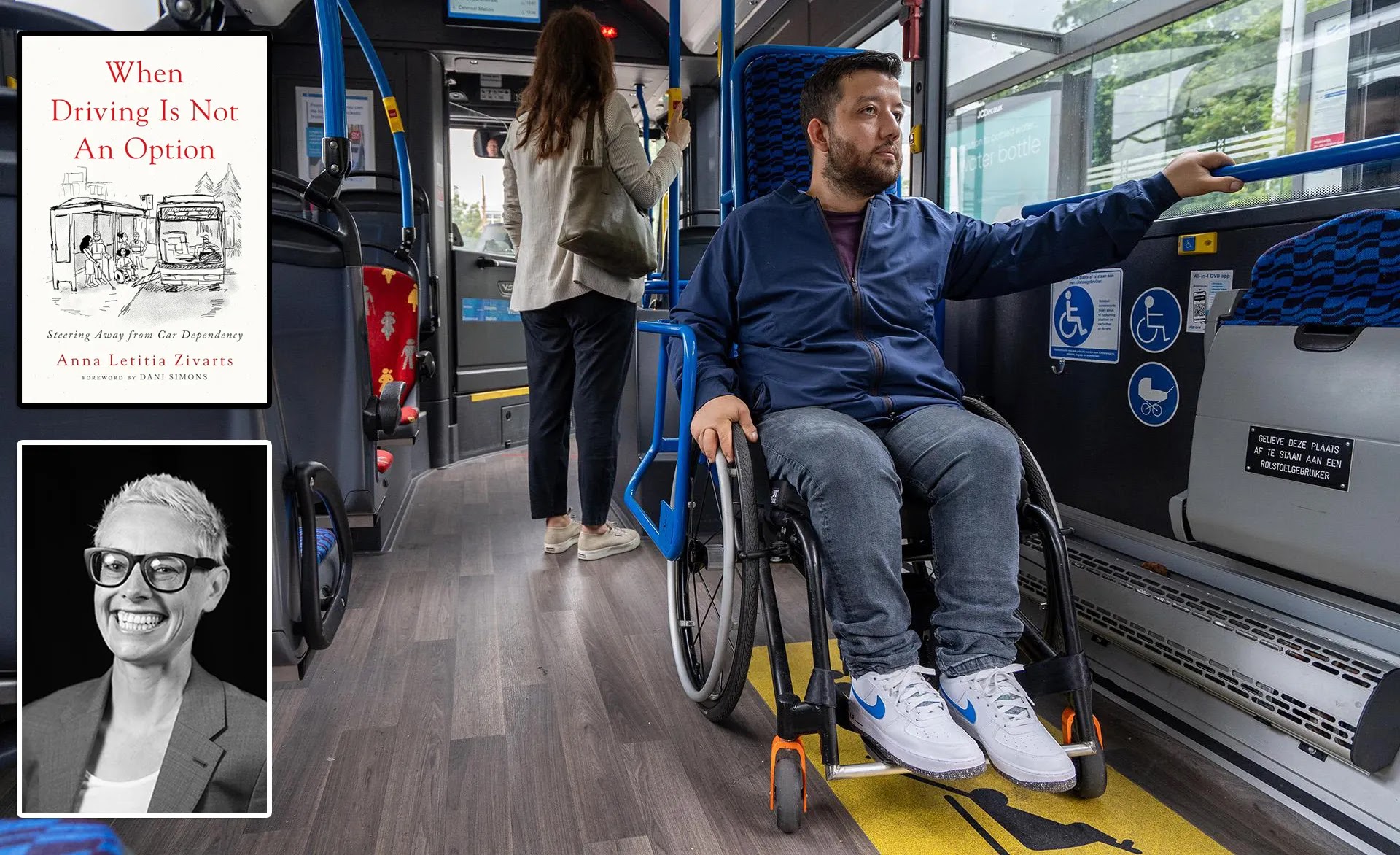
A power wheelchair user who lives in Seattle, she often relies on bus and light rail.

The sidewalks near her apartment and the closest bus stop have sections heaved up by tree roots, filled with loose gravel, and lacking curb ramp.

So, she rolls in the street.

"I'll have people yell at me and tell me to get out of the road, sometimes with profanity," Sepúlveda says in the book When Driving is Not an Option.

"I understand it does not look safe to them, and it is not safe, but it is even less safe for me to be on the sidewalks."

Friday, December 27, 2024

WHEN DRIVING IS NOT AN OPTION

STEERING AWAY FROM CAR DEPENDENCY


There have been small successes in funding t
ransit, sidewalks, pathways, and connectivity.

In 2022, the Washington State legislature passed a $17 billion transportation package that included $5.2 billion for transit, bike, and pedestrian projects.

It was the first time multimodal investments were larger than highway capacity expansion funding.

Improving transit can help nondrivers and everybody else, says Author Anna Zivarts.

In her book, When Driving is Not an Option, she recounts dozens of anecdotes of people enduring long, frustrating transit trips or not being able to access it at all.

Thursday, December 26, 2024

WHEN DRIVING IS NOT AN OPTION

STEERING AWAY FROM CAR DEPENDENCY


In 2023, 7,318 people were killed by vehicles, a 14 percent increase over 2019, according to the Governors Highway Safety Association (GHSA).

It also reported 1,149 bicyclists were killed on U.S. roadways in 2023, up four percent from 2022.

Safety is a major concern. Author Anna Zivarts — an avid cyclist — says she's seen a disproportionate number of deaths and injuries among those who bike, walk, and roll.

City, county, and state departments of transportation need to plan for safe multimodal mobility from the start, she says, not leave it as an afterthought.

That means funding mobility appropriately.

Transit, sidewalks, pathways, and connectivity should be weighted equally with multibillion-dollar bridge and highway projects, she argues.


Wednesday, December 25, 2024

WHEN DRIVING IS NOT AN OPTION

STEERING AWAY FROM CAR DEPENDENCY


People of color, those with low incomes, immigrants, and people with disabilities tend to have lower rates of car ownership.

They also have less housing, mobility, and job options. 

Fewer than 25 percent of working-age adults who are disabled work full- or part-time, according to the U.S. Bureau of Labor Statistics, compared to 66 percent of non-disabled adults.

In many cases, it is not the underlying disability that stifles employment, but rather the lack of transportation access to fulfilling work opportunities and financial independence.


Tuesday, December 24, 2024

WHEN DRIVING IS NOT AN OPTION

STEERING AWAY FROM CAR DEPENDENCY


Author Anna Zivarts — who was born with nystagmus, a genetic condition that means her eyes are always shaking, affecting her vision and preventing her from driving — is the program director of the Disability Mobility Initiative at Disability Rights Washington.

A community organizer by profession, she redoubled her efforts to fight for better pedestrian mobility when she learned her son has the same low vision condition she has.

She says she gets a lot of pushback when talking about the number of nondrivers — adding that some studies, including from Washington and Wisconsin, place the number closer to 30 percent.

But she believes planners, policymakers, and others need to start seeing and engaging with nondrivers, understanding the needs of this significant chunk of the population, and including nondrivers in transportation planning decisions.

They also need to make roads safer for everybody, and she lays out changes planners can make in her book -- When Driving is Not an Option.

Monday, December 23, 2024

WHEN DRIVING IS NOT AN OPTION

STEERING AWAY FROM CAR DEPENDENCY


"The big theme of book is there are a lot of nondrivers — way more of us than people realize,"

When Driving is Not an Option Author Anna Zivarts said in an interview with Planning Magazine, noting that nondrivers are often ignored, stigmatized, or treated like second-class citizens.

"If we recognized that disability, income, age, and other factors mean that at least 25 percent of people in the U.S. are nondrivers, we could create much more inclusive communities."


Sunday, December 22, 2024

WHEN DRIVING IS NOT AN OPTION

STEERING AWAY FROM CAR DEPENDENCY


More than a quarter of the people that planners in the U.S. design for do not drive cars.

Anna Letitia Zivarts is one of them.

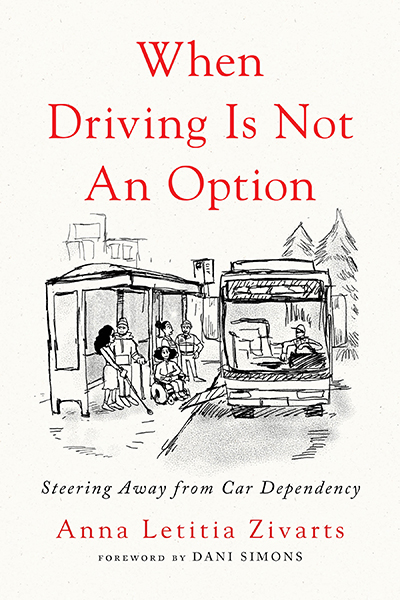
Her Island Press book, When Driving is Not an Option, published earlier this year, aims to rethink the way we plan cities.

While many planners are working toward reducing car dependency and boosting multimodal mobility, Zivarts believes it will take a seismic and largely political shift to retrofit cities in a way that values those who walk, roll, bike, and use transit to get around.