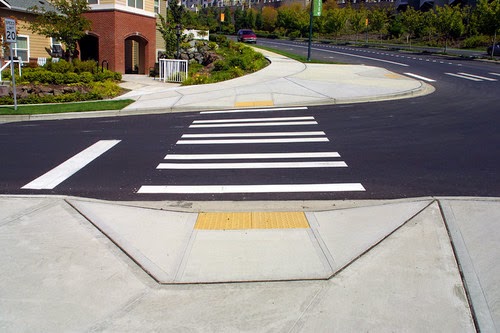
Showing posts with label safe street crossings. Show all posts

Monday, July 20, 2015

75,000 READERS

OUR WORK HAS SPREAD WORLDWIDE


This blog now has 75,000 readers from more than 100 nations.

It has been growing strong fore more than 5 years.

This is the only blog in the world dedicated to urban design and travel and how they relate to people with disabilities.

More than 1,000 stories -- with full photos and graphics -- have been posted.

Today, we celebrate the built environment by focusing on our collaborative work with PlusUrbia Design.

The Miami-based planning firm started shortly before this blog launched.

For the past year, we have been proud to be affiliated with PlusUrbia and its dedication to design a better world.

This past week, PlusUrbia has been featured on TV, radio, websites and print articles.

The news has been a proposed re-design of Calle Ocho -- to make it safer for wheelchair users, transit riders, pedestrians and bicyclists.

Check out PlusUrbia's facebook page at:


https://www.facebook.com/plusurbia

(the photo is PlusUrbia's Juan Mullerat conducting a TV interview about our vision of a better Calle Ocho.

Sunday, July 19, 2015

NATIONAL PUBLIC RADIO PRAISES PLUS URBIA DESIGN'S MOVE TO MAKE CALLE OCHO SAFER FOR PEDESTRIANS AND WHEELCHAIR USERS

Reimagining Calle Ocho: Urban Designers Want To Take It Back 


Change may be coming to Calle Ocho.
In the 1960s, the street running through the heart of Little Havana was transformed from a small neighborhood road to a one-way, three-lane highway intended to alleviate traffic flowing downtown. 
As a result, cars have reigned supreme, taking away the pedestrian-friendly atmosphere the street used have.

Urban design firm PlusUrbia has decided it's time to bring that atmosphere back. The firm just released a plan for Calle Ocho that seeks a return to the two-lane, two-way street it used to be. The plan also includes an expanded sidewalk, a bike lane, and a bus lane.
“The key word here is options. You need to provide options for mobility, not just for the car,” says Juan Mullerat, the director of PlusUrbia.

The Florida Department of Transportation (FDOT) has also been looking into redesigning the area. Ivette Ruiz-Paz, spokesperson with FDOT, explains that in addition to goals like developing a pedestrian-friendly area and improving safety, they also seek to improve access to Brickell.
“FDOT is studying the area because of all the growth in Brickell and West Brickell. The trouble is that FDOT views improvement as just more cars: faster, wider, one way,” says PlusUrbia communications manager Steve Wright, “our vision is, it’s not like we’re anti-car, but the vision is: share things.” 

Wright and Mullerat both live within several blocks of Calle Ocho, and approached this project as concerned community members seeking to improve the status of their neighborhood.
In addition to concerns with safety and accessibility, they also credit the street’s unfriendliness to pedestrians with taking away from the neighborhood’s personality. 

Wright, who moved to Little Havana because of the fame and character of Calle Ocho, says every so often a local shop goes out of business and a chain gets put in. “Developers say ‘Look, it’s a highway. Put highway-like development on it.’ Pretty soon the character that drove everyone there will be gone.”

The firm is quick to point out this proposal is by no means a final plan, but instead a jumping off point for creating more discussion around how to create the best possible Calle Ocho.

“What we proposed is not the final or the best solution. Call it an appetizer to see if we can get people out there and really put our minds together something to make Calle Ocho more of a destination instead of a pass-through highway from the turnpike to Brickell,” says Mullerat. 

The plan has received comments from community members already, and PlusUrbia is awaiting to hear what FDOT will say. There is precedent of the agency working with private firms before, and Mullerat is hopeful FDOT will take into consideration community needs and concerns when deciding how to proceed with Calle Ocho. 

Ruiz-Paz says of FDOT's timeline that they expect to have "short term pedestrian improvements" put into place within the next two or three years.

Mullerat sums up the project in a single line: “This is the heart of Miami — we better get it right.”

LINK TO STORY:

http://wlrn.org/post/reimagining-calle-ocho-urban-designers-want-take-it-back

LINK TO AUDIO CLIP:

https://soundcloud.com/wlrn/sets/newscasts-friday-july-17-2015

Saturday, July 18, 2015

MIAMI ABC TV AFFILIATE WPLG LAUDS PLUS URBIA DESIGN'S CALLE OCHO OF THE FUTURE

Little Havana business owners call for pedestrian friendly Calle Ocho

Local urban planning, design firm rolls out redesign for Southwest Eighth Street 

 MIAMI -

One of South Florida's most famous streets could undergo a major makeover thanks to a plan rolled out by a local urban planning and design firm.
It seems ironic that the iconic Calle Ocho, South Florida's biggest pedestrian street party one weekend a year turns back into a three-lane roadway the rest of the year. After all, the internationally famous street in little Havana has become a tourist destination.
Bus loads come from near and far.

"Business is exploding. It is amazing, and the hotter it is outside the better it is for me," said Suzanne Batlle, who owns the Azucar Ice Cream company.

Batlle agrees that the road needs to be more pedestrian friendly.

"Certainly for walking traffic, and we have a lot of that and it is only going to get more and more," said Batlle. "They don't realize people are going 50 miles an hour down this street."

Juan Mullerat runs an urban planning and design firm out of a small Coconut Grove office. He lives near Southwest Eighth Street and wants to see little Havana become safer for pedestrians, and more traffic friendly for shop owners.

So on his own, pro bono without a client, and any monetary stake in the outcome, he instructed his staff to come up with a comprehensive urban pedestrian plan for Calle Ocho.

"Right now it works as a highway," said Mullerat, owner of PlusUrbia. "It wasn't intended to be a highway. It turned into a highway before (State Road) 836 was created."

Fifty years ago, the street was a two-lane two-way street. In his new proposal, it would revert back to that with a dedicated bike or bus lane.

"Southwest Eighth Street is a state road. It is not a city road," said Miami Commissioner Frank Carrollo. "Unfortunately it is a big bureaucracy, but little by little we are working toward making it pedestrian friendly."

Carrollo said he and his office have been working since 2013 to find a solution to Eighth Street's pedestrian problem.

"We are going to add crosswalks and we are going to enhance them," said Carrollo.

Carollo said the Florida Department of Transportation is conducting a study to determine if Calle Ocho should return to its roots as a two-lane two-way street, but that conclusion is three to four years away.

Mullerat said that is too long and he wants the community to have more input.

"The whole idea of this is to get everybody else's opinion and to get a plan everybody is comfortable with," said Mullerat.

LINK TO VIDEO CLIP:
http://www.local10.com/news/little-havana-business-owners-call-for-pedestrian-friendly-calle-ocho/34204756

Friday, July 17, 2015

NEXT CITY INSPIRED BY PLUS URBIA'S TAKE ON A BETTER CALLE OCHO

Miami Designers Counter Florida DOT With Their Own Plan for Little Havana Corridor


Calle Ocho in Miami’s Little Havana is a car-centric, three-lane road in close proximity to I-95 — but it wasn’t always that way. In the 1960s, a two-lane road served as a more traditional neighborhood main street. Urban planners at design firm PlusUrbia want that version back.
According to Curbed, the Florida Department of Transportation’s current study of the road inspired two local designers to draw up their own plans to convert Calle Ocho’s main stretch into a multimodal core.
PlusUrbia Design proposes to turn Calle 8 back to its original self — reversing 50 years of disenfranchising neighborhoods and commerce with blight left in the wake of a corridor turned freeway.
With developers eying Little Havana, the National Trust for Historic Preservation recently noted that the community’s “scale and character [are] threatened by zoning changes and lack of protection for its many historic buildings.” The National Trust put Little Havana on its “2015 Most Endangered” list.

PlusUrbia’s Juan Mullerat and Steve Wright live nearby, and their vision is a street that’s more accommodating to walkers than drivers, and includes a wide sidewalk and a dedicated bike lane.

“The neighborhood wants a calmer, more pedestrian-friendly street. We just put it on paper,” Mullerat told the Miami New Times of their pro-bono (unsolicited) effort.

LINK TO NEXT CITY STORY:

 https://nextcity.org/daily/entry/miami-design-florida-dot-little-havana-calle-ocho


Thursday, July 16, 2015

MIAMI NEW TIMES LOVES PLUS URBIA DESIGN'S REDESIGN OF CALLE OCHO

WHEELCHAIR USERS COULD SAFELY CROSS SW 8TH STREET IN MIAMI


Juan Mullerat argues that Calle Ocho is Miami’s most historic street, but sometime between now and the 1960s it was transformed into a three-lane highway to absorb the brunt of the city’s growing east-west commuters.

“I’m driving down it down and I don’t see anybody walking, just cars,” Mullerat tells New Times on his commute home. “I think the solution is in the back of everybody’s mind. It’s not visionary. It’s removing a highway and putting a real street where it’s supposed to go.”

Mullerat is the director of PlusUrbia, a small design firm in Coconut Grove. After the Florida Department of Transportation announced plans to redevelop roadway designs of Calle Ocho from NW 27th Avenue to NW First Avenue, his team began working. For the last few months, Mullerat and a team PlusUrbia designers tackled the “Highway Ocho” problem pro-bono, trying to return Calle Ocho to the calm, pedestrian-friendly main street it was 50 years ago. They released their proposal yesterday.

Mullerat has spoken with the Calle Ocho Merchants Association, the Little Havana Association, and the Shenandoah Association. Mullerat lives with his wife and daughters three blocks away from Calle Ocho. His colleague, Steven Wright, leaves nearby too. Mullerat stresses that their design is a sketch of all the ideas the community seems to already agree on. “The neighborhood wants a calmer, more pedestrian-friendly street. We just put it on paper,” he says.

Some time in the 1960s that 7th Street and Eighth Street became one-way and an extra lane was added to them. “Back in the '60s all cities around the country were traffic-oriented. The interest was to move as many cars as fast as they could to alleviate traffic,” Mullerat explains. “Over the years, Calle Ocho became a dangerous street for pedestrians.”

The plans include returning Calle Ocho to be a two-way, two-lane street, as it was originally. They also extend the sidewalk to comfortably fit passersby and add a bike lane and bus-only lane. Parallel parking on both sides of the street will be available, too. However, to compensate, one driving lane will be removed. “We want to try to get better streets, to walk down Calle Ocho with a stroller and be comfortable, and see bikes and trees when we walk to see its quality retail, and not just go in my car,” Mullerat says.

Mullerat also stresses that his firm has no stake in the project. Even if the FDOT accepts their proposal, they don’t receive any money. “At the end of the day, it’s an FDOT project. Our stake is literally zero,” he says. “I live three blocks away. I want my main street. Calle Ocho is the center of Miami why not support it and let the street become better. That’s our stake.”

Whether or not the FDOT accepts PlusUrbia’s proposal, Mullerat fears that FDOT won’t take the opportunity to bring real change. “There’s an effort out there to make better streets. We just want to make sure they are better. I would hate for the powers that be to just put a couple of trees and benches and call it a day,” he sighs.

Link to Miami New Times story:

http://www.miaminewtimes.com/news/urban-planners-turn-calle-ocho-back-to-two-lane-pedestrian-friendly-street-7756355

Wednesday, July 15, 2015

CURBED LOVES PLUS URBIA'S VISION FOR CALLE OCHO

HIGHWAY OCHO NO MORE


The Florida Department of Transportation is currently studying Little Havana's main street, SW 8th Street, also known as Calle Ocho, along with the accompanying SW 7th, going from I-95 as far west as SW 27th Avenue, as part of all the new West Brickell development. Both SW 7th and 8th Streets are now three-lane high speed thoroughfares. Juan Mullerat and Steve Wright of design firm PlusUrbia both live blocks away. Frustrated with the early results they have seen from FDOT so far, PlusUrbia has put together its own proposal that would return Calle Ocho to being a calmer, local main street, like it was 50 years ago.

Originally a 2-way typical American main street, Calle 8 was transformed in the late 60s into the highway we know today. A few years later, the nearby Dolphin Expressway (I-836) was completed. Despite the opening of an elevated east-west speedway into downtown, Calle Ocho's prime stretch between 27th Avenue and I-95 was never converted back into the quaint main commercial core of Little Havana.

The Florida Department of Transportation is currently studying the SW 7th and SW 8th Street corridors. Early meetings have shared FDOT scenarios that seem to be more concerned with vehicle movement than people movement.

PlusUrbia, with strong ties to Little Havana, wants to unlock Calle 8's potential by proposing the restoration of the original two-way traffic. The Miami-based urban design firm has created images of a 21st century Calle Ocho with multimodal transportation alternatives such as dedicated bike and transit lanes, comfortable wide sidewalks and additional safe crosswalks in a vibrant urban setting.
"Calle 8 should be for all Miamians to enjoy, not only to drive through. Popular opinion will rescue SW 8th Street from half a century of destruction as "Highway Ocho".

Link to Curbed story and comments:

http://miami.curbed.com/archives/2015/07/15/calle-ocho-little-havana-fdot-renovation-plusurbia.php

Monday, March 16, 2015

HEIDI JOHNSON-WRIGHT ON THE ADA


STRONGTOWNS PODCAST LINK

A weekly conversation on the Strong Towns movement hosted by Charles Marohn. The podcast blends fiscal prudence with good urban design to highlight how America can financially strengthen its cities, towns and neighborhoods and, in the process, make them better places to live.

This week Chuck talks to Heidi Johnson-Wright, an ADA coordinator in Miami Dade County, about the Americans with Disabilities Act.

http://shoutengine.com/StrongTownsPodcast/heidi-johnson-wright-on-the-ada-7556


Tuesday, March 10, 2015

COMPLETE STREET WITH INCLUSIVE DESIGN

FROM STRONG TOWNS.ORG

By Heidi Johnson-Wright


““...(P)aralyzed limbs may not particularly limit a person’s mobility as much as attitudinal and physical barriers. The question centers on ‘normality’. What, it is asked, is the normal way to be mobile over a distance of a mile? Is it to walk, drive one’s own car, take a taxicab, ride a bicycle, use a wheelchair, roller skate, or use a skate board, or some other means?””
— Prof. David Pfeiffer, Ph.D, internationally recognized scholar in the field of disability studies, and polio survivor 


Strong towns must also be inclusive towns, communities that welcome everyone. Places where people of all abilities can live, work and get around. Rights of way that are safe and accessible to folks with a range of mobility needs.

What's it like to navigate streets as a wheelchair user? What works? What doesn't?
I have been using a wheelchair as my principal means of mobility for four decades, so I'm always seeking smooth, wide and level surfaces. I want the safest and most comfortable path of travel possible. As someone who has worked as an ADA compliance and public works professional, I'm always analyzing sidewalks, streetscapes, curb and gutter, curb ramps and crosswalks. My eyes are drawn to concrete work, to the types of pavers used, to detectable warnings and the placement of bus shelters.

Sometimes, the smallest details make all the difference.


For me, the ideal accessible pedestrian path of travel is as wide as the sidewalks lining the great avenues of New York City. Plenty of room for walkers, wheelers, babies in strollers and then some. Lots of space for me to safely pass around slow walkers when I'm in a hurry. It's disquieting when someone half a block ahead sees me approaching and yanks their child out of my oncoming path. Sometimes the sight of the poor kid flying through the air jolts me so much, I whip around to see if I’ve unknowingly left a row of maimed bodies behind in my wake.

Even pricey, well-made wheelchairs have limits to their suspension. If I could, I'd pave the paths of the Earth with the rubber safety surfaces used on playgrounds. Smooth, seamless and shock-absorbing makes me smile. But given real-world requirements, smooth concrete with narrow stress joints works for me. I also love wide, flat flagstones like the ones used throughout Barcelona.

I dislike even the smoothest of pavers and despise brickwork. What looks like tiny seams to walkers means major up-and-down bumping for wheelers. Even a two-block trip with a Starbuck's latte in hand results in coffee spills on my lap and a subsequent trip to the dry cleaners. Longer trips over bumpy terrain mean repeated, sustained jarring that can trigger serious pain for folks with arthritis and other disabilities. Don't even get me started on tree well pavers or grates. Properly maintained Addapave tree pits are a much better choice.


Let's talk about curb ramps. Their mundane appearance is deceiving. My number one biggest complaint is the use of the cookie-cutter clip-art curb ramp design where it doesn't belong. You know the one I mean. It's the copy-and-paste design architects use in drawings where building perimeters meet sidewalks and parking lots.

There are many different designs of curb ramps that can be found in state DOT roadway design standards. Why? Because differences in terrain and limitations of space require different ramp designs in order to be compliant and safe. Level landings at top and bottom are essential. The top landings in particular must be unobstructed. I can't count how many times I've reached the top of a curb ramp only to nearly run into a pedestrian signal pole or other irritating impediment. And please no meter boxes on the slope or storm sewer grates at the bottom. Be sure there's a level, two-foot transition to the gutter, or wheelers who forget to fasten their seat belts are likely to be ejected.

Don't design curb ramps at the maximum 1:12 slope, but rather 1:14. In fact, the feds say they're to be designed with the minimum possible slope. And please: TWO curb ramps per corner instead of a single diagonal ramp. Drivers can't tell where a wheeler is headed when he or she comes off the diagonal into the street. And unless the corner, ramp, intersection and crosswalk are all expertly designed in harmony, wheelers often must go out into the active vehicular way in order to cross. Many times I've had to cross using a diagonal ramp and felt air displacement from cars passing along next to me.

And finally, nothing makes steam come out of my ears like rolling along and being foiled by an easily preventable impediment or detour. Pedestrian paths of travel are in flux and must always be monitored. Coordination between local public works, transit, utilities, and state DOT is essential to preventing obstructions caused by landscaping, light poles, street signs, signal boxes, bus shelters, bus benches, newspaper boxes, bike racks, etc.


Just as bad are sidewalks suddenly blocked off with little or no warning. In this case, I’m not talking about the simple sidewalk or lane work, or an emergency fix of a broken water main. I mean many months of torn up or obstructed rights of way due to long-term construction projects which provide no alternative, accessible, safe pathway. What is a minor problem for a walker who can easily re-route can prove to be an extremely inconvenient -- even dangerous -- situation for someone in a wheelchair.

I’ve encountered this situation numerous times. Most recently, I was attempting to get to a doctor’s office for a first-time appointment. Due to limited parking options, I had to search for an on-street space. I found spaces one block away, but the swale had obstructions that blocked my van’s ramp from deploying. I had to settle for an on-street space four blocks away.

After parking, I rolled along a couple blocks with bumpy sidewalks and corners with dangerously steep curb ramps. But the worst was saved for last. The final block to the doctor’s office was impassable due to major construction that had closed off the sidewalk. My only real option was to cross to the other side of the street, roll down the block, then cross back over. Problem was, the street I had to cross was four lanes plus a turn lane. Drivers fly down it like a highway. The closest signalized crossing was three blocks the other way. A kind lady who saw my dilemma crossed with me at an unsignalized but clearly marked pedestrian crosswalk. I am forever grateful, knowing how wheelchair users have a lower profile than walkers. This makes us like the amphibious targets in a real-life version of the classic video game, Frogger.

Navigating a few blocks should not be so complicated and so dangerous. Elected officials need initiatives such as New York City Mayor Bill de Blasio’s Vision Zero push to eliminate traffic deaths. Planners, traffic engineers, capital projects managers and public works departments that issue rights of way permits need more common sense designs and policies.

All of these things should be formulated with input from the disability community. Each county, city, town and village should have an advisory committee comprised of local folks with disabilities. Those involved in streetscape design should consult orientation and mobility trainers who work with the visually impaired. People who are blind learn to navigate through the world in specific ways. Design compatible with those methods often equals good, sensible design.

The federal Proposed Guidelines for Pedestrian Facilities in the Public Right-of-Way address access for blind pedestrians at street crossings, wheelchair access to on-street parking, and various constraints posed by space limitations, roadway design practices, slope, and terrain. These guidelines -- which are expected to become mandatory and enforceable within a year or two -- will cover pedestrian access to sidewalks and streets, including crosswalks, curb ramps, street furnishings, pedestrian signals, parking, and other components of public rights-of-way.

Now’s the time to focus on inclusive design.


http://www.strongtowns.org/journal/2015/3/2/complete-street-with-inclusive-design